If you’ve ever gotten confused over nails in your hardware department store then you’re not alone. Nails are used in a variety of materials for projects such as masonry and wood, which are two of the most common materials. There are long and short nails, brass nails and galvanized and different types of nail heads. They can all be used for something around the house, or remodeling a whole room in your house. To find out more about nails read about the 5 most common types of nails, and what they’re used for.
There are 5 Different nails that are useful around the house. Take a peek at a few of them from the list below.
Common Nails
The common nail is used a lot with wood that doesn’t require finish work. Places to use the nails are on 2x4s and other boards surfaces such as particle board and regular wood panels. 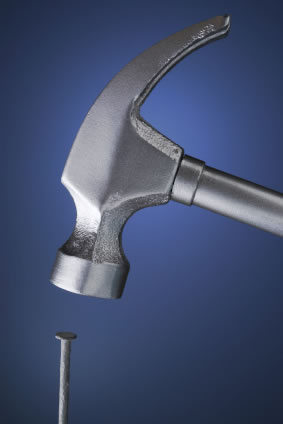 It has a flat head and comes in different lengths. Usually the nail head is left showing. Use in all of your remolding efforts around you home or garage.
Casing Nails
The casing nails are for all of your finer work needs when dealing with wood. Cabinets and molding trim work is perfect for these types of nails. So if want some new shelves or new kitchen cabinets then make sure you have these on hand. You don’t want your detailed work to be ruined by unsightly nail heads.
Finishing Nails
The finishing nails are another nail type, but they can be used interchangeably with casing nails for the fine work at home. The rounded nails heads can be counter sunk or not.
Common Brads
Are rated on length only. They are good for very light, and can be used like the casing nails for trim work. The nails are of lighter weight, and are shorter than the common finishing nails.
Box Nails
Box nails are like a common nail but the head on them is much larger. The shank of the nail is much larger, and is used primarily for framing and decking. If you need extreme holding power then this is the nail for you to have.
Not only will you need to use these types of nails but there might be instances where another type of fastener will come in handy. When you’re a home owner you just never know what might break, or what you might like to do! Here’s another list of different nail types.
- Galvanized Nails. Use these nails when you want to build a dog house, frame or build a wooden sandbox for the kids. They are coated with a solution that is highly resistant to rust. The shank makes them very tough to bend.
- Paneling Nails. The paneling nail is colored to match the type of paneling that you want to put up.
- Masonry Nails. If you’ve got a basement and you need to mount something on the wall then the masonry nails are the nails to use.
- Aluminum Nails. Aluminum nails are a very soft nail and are to be used only for certain things such as mounting lights for a pool. They’re not very strong, but don’t rust.
- Pointless Nails. The pointless nail is if you’re very particular about not splitting any of the wood you’re working on. It’s good for molding trim work or some corner pieces for baseboards.
 There will be other types of holding and latching devices that you’ll need around the house too. Decorative screws, bolts, tack nails, and other types of will be necessary at some point in your home maintenance and remolding needs. Take some time and build up your supply. Remember to always use safety precautions when nailing and cutting materials. Wear eye protection to keep any materials from accidentally being poked into the lens of the eye. A good idea to learn more about nails and other fasteners is to get some home repair books, and look at a few examples of how the nails are used in projects for the home. Experience and a little knowledge will go a long way to knowing your nails.